Perfilado de sección


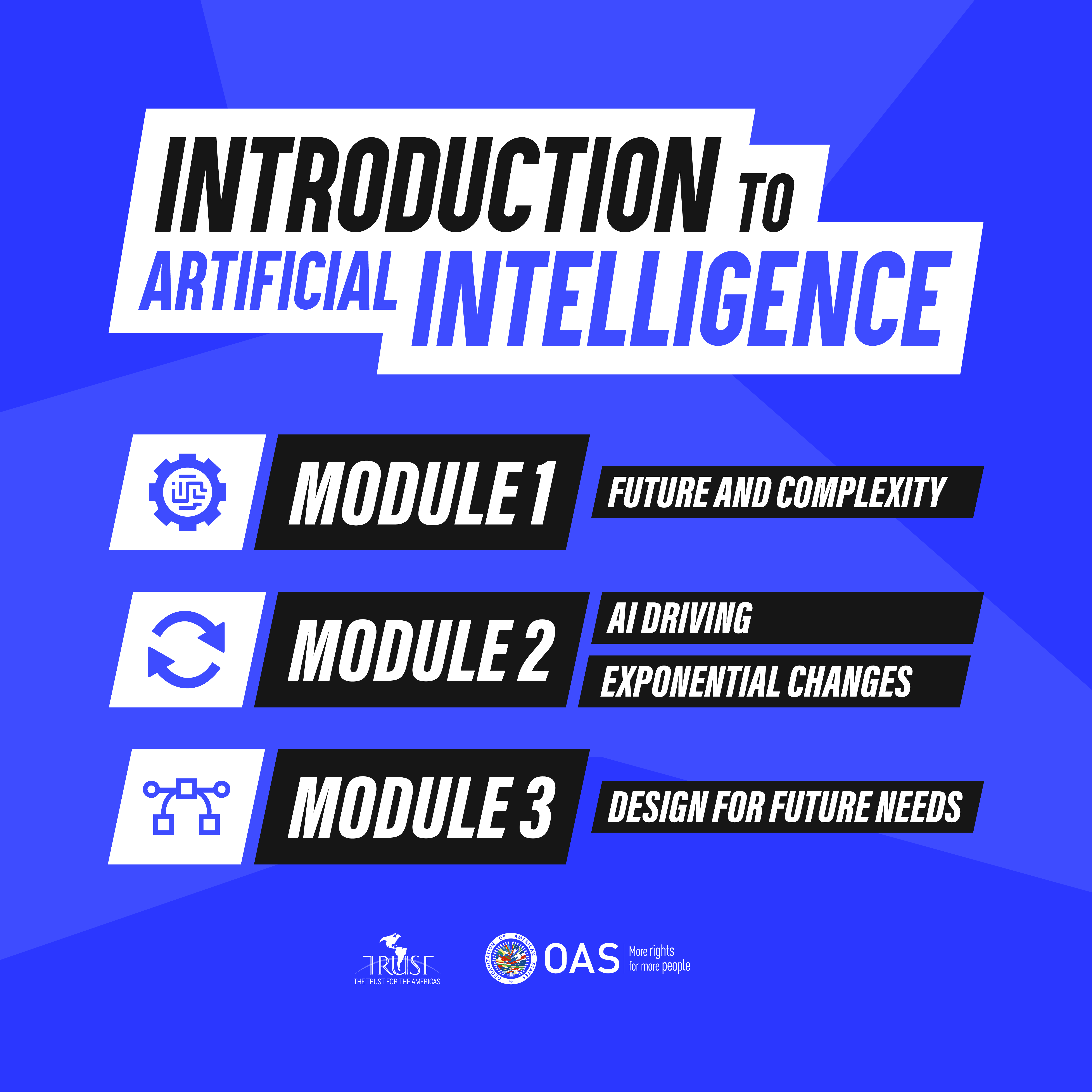
  • This course is based in three pillars considered by the AI Design Institute as the basic knowledge to understand future challenges that society will face in terms of technology. With that in mind, we aim to provide students with the best set of materials and learning path to comprehend the foundations within the three modules.

    The course is divided into 10 classes covering details of the modules concepts. 


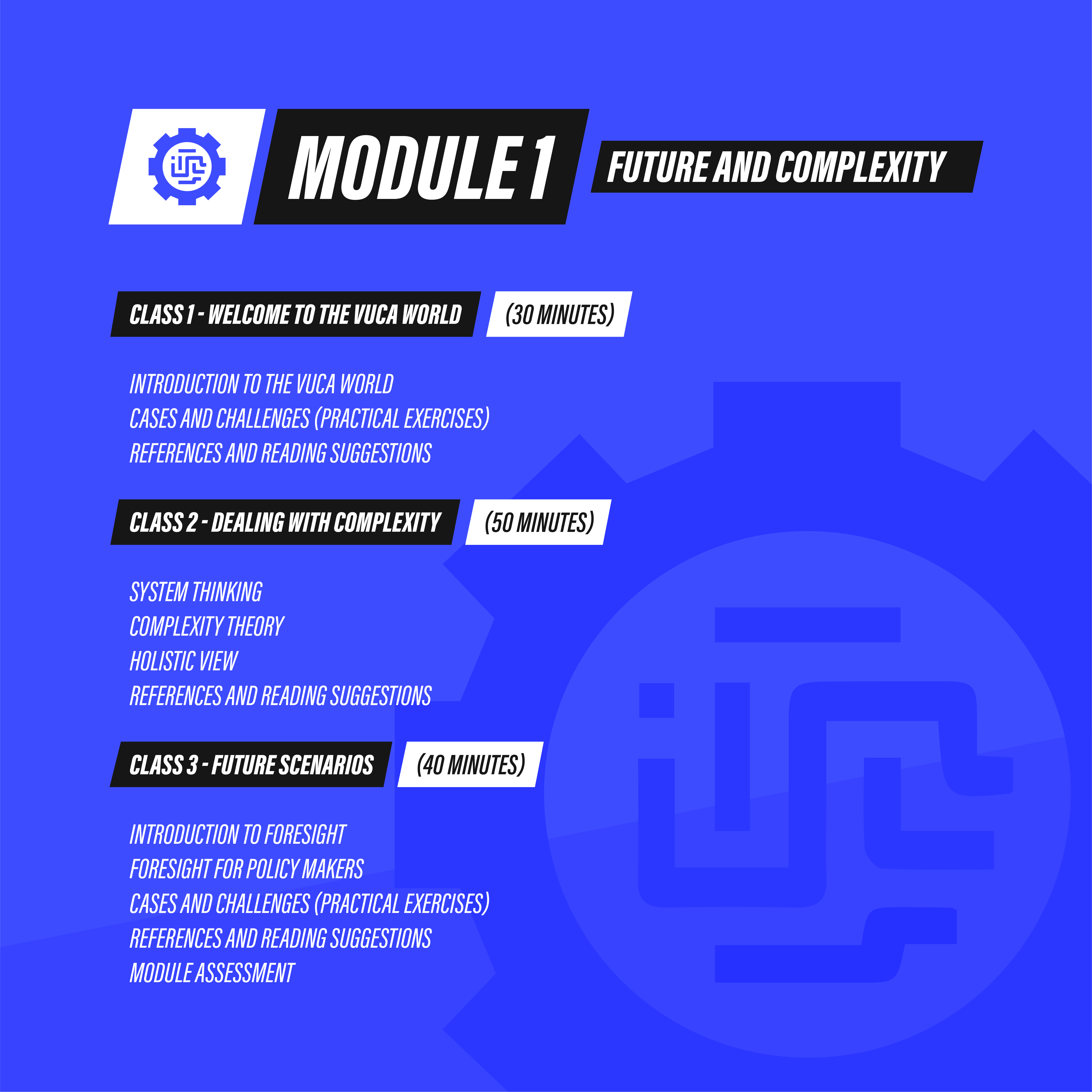
    • In the first class of our course we will study about the VUCA World and the challenges we face in our society. The problems we need to deal with nowadays are different from the problems we had last century, thus it is important for us to get to know new tools and techniques to work with these complex challenges.

      Class 1 (Part 1)


    • Class 1 (Part 2)

    • In this class we will introduce the concepts related Theory of Complexity and Complex Thinking as a way to understand the contemporary world and embrace uncertainty. Among the topics we will discuss there are the difference between dualism and complexity, the impact of chaos in the real world, and what we can learn from complexity.

      Class 2 (Part 1)

    • Class 2 (Part 2)

    • Class 2 (Part 3)

    • In this class we will discuss the importance of long term thinking and future studies in strategic planning. We will also introduce Foresight as a tool for long term planning and discuss how it is used by governments and by the UN.

      Class 3


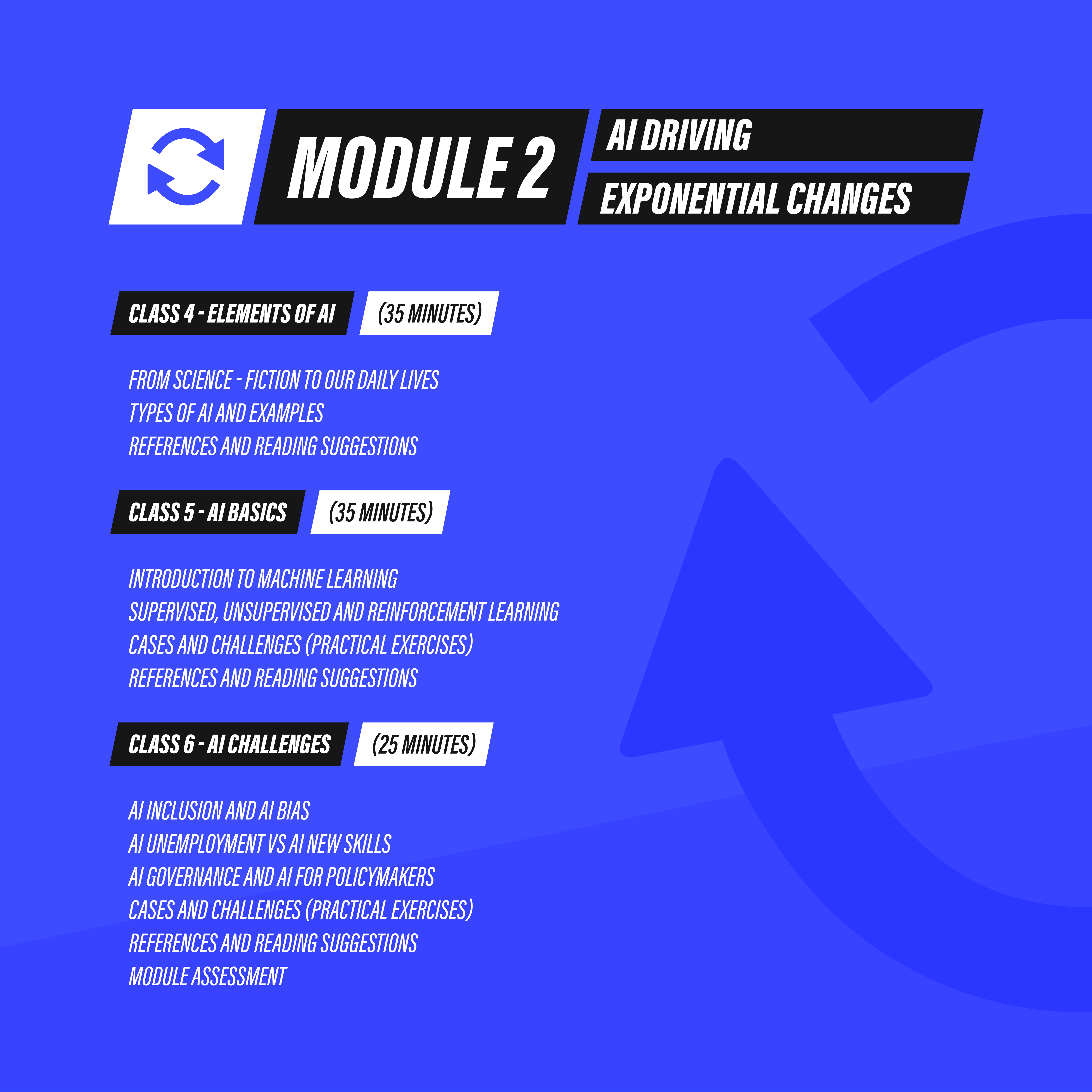
    • In this class we will discuss why AI is a game changer for global society. We introduce the main concepts of AI, its history and some of the current applications. We will discuss the following topics: what is AI; How it has evolved throughout the decades; What are the main applications.

      Class 4

    • In this class we will present the main technical aspects of AI. We will discuss the main types of AI, how they operate, learn and what we can do with each one of these types. The topics we will discuss are the difference of Supervised, Unsupervised and Reinforcement learning and the types of problems each one can operate on.


      Class 5

    • In this class we will discuss the main challenges of AI, specially from a governance perspective. We will discuss the problem of bias and discrimination and how we can overcome those challenges. We will also study about the problem of unemployment and the necessary skills for the future.

      Class 6


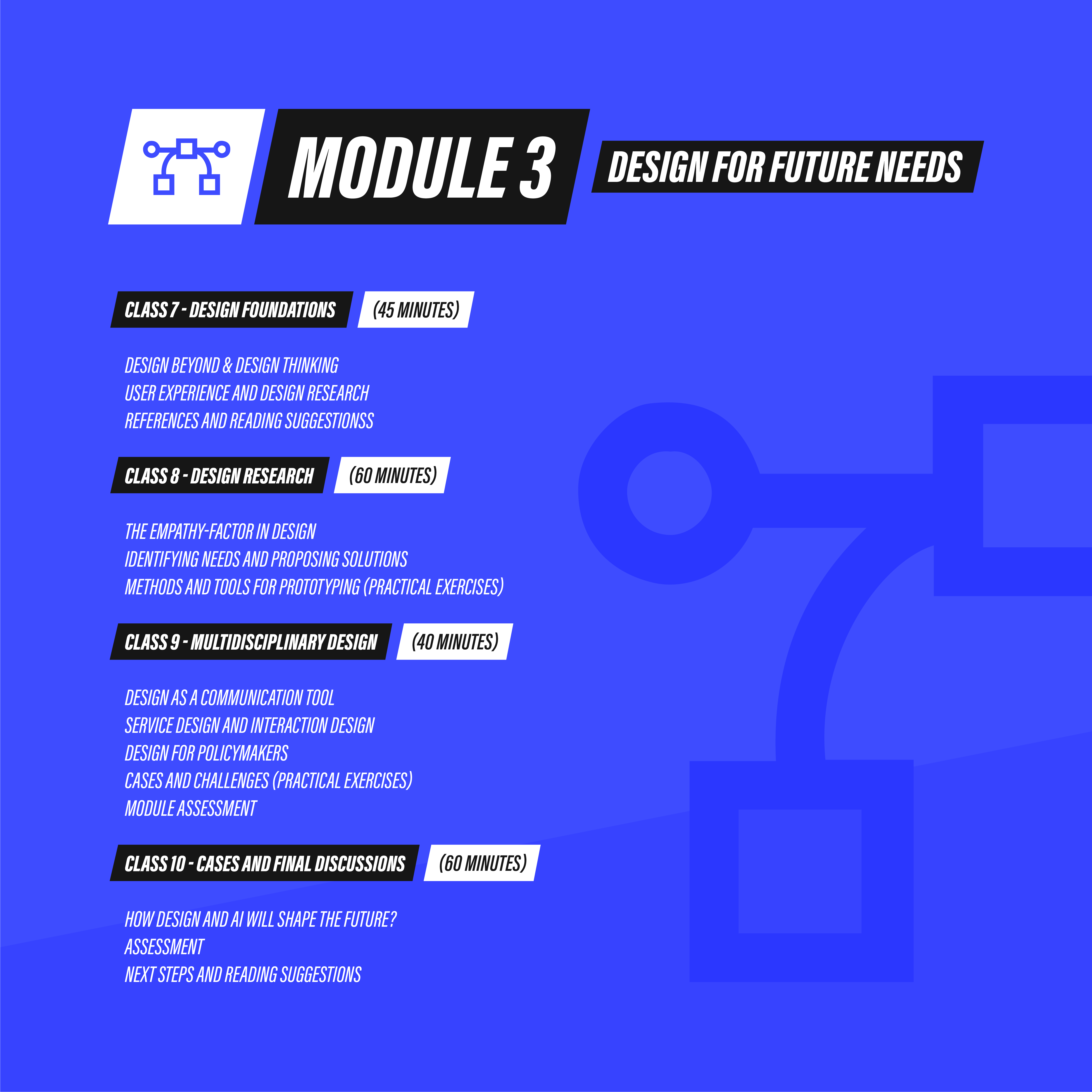
    • An introduction to the design discipline that goes beyond the graphical and aesthetics approaches of design. In this class we will study tools and approaches that position design as a necessary knowledge to enable us to deal with complex challenges and innovative solutions.

      We will learn the basics of user experience design and how great products and services are created.

      Class 7 (Part 1)

    • Class 7 (Part 2)

    • Perhaps the most important factor when creating new services or products is the empathy factor, so we will see in this class what design tools we can use to help us build empathy and better understand the user - or the person who we are designing for.

      We will see design research methods both quantitative and qualitative and how they are used to improve the quality of our project outcomes.

      Class 8 (Part 1)

    • Class 8 (Part 2)

    • Class 8 (Part 3)

    • Design should not be known exclusively by designers. Design is not strict to only one field or discipline, it is transdisciplinary by nature. It means that different areas of knowledge can benefit from design. So, in this class we will see how design is applied and used in other areas, such as in policy-making.

      Class 9 (Part 1)

    • Class 9 (Part 2)

    • In our final class we will wrap up the topics discussed in the previous classes and see how the three main knowledge areas we have studied - Complex Theory, Artificial Intelligence, and Design - can be connected and become a driver for innovation.

      This last class is followed by a discussion about the impact that Artificial Intelligence and Design will have in our future and how someone who learns how these areas can be connected will be more prepared to deal with the complex and uncertain challenges present in our society.

      Class 10